


Madison, Wisconsin
She has won the 2017 Gold Line Press poetry chapbook contest, the 2015 Science Fiction & Fantasy Poetry Association’s Rhysling Award for the Long Poem, the WFOP 65th Anniversary Poetry Contest, the 2013 SFPA Elgin Chapbook Award, the 2012 Rannu Fund for Speculative Literature Award for Poetry, Heartland Review’s 2011 Joy Bale Boone Poetry Prize, both the Theme and Poet’s Choice divisions of the 2010 WFOP Triad competition, received an International Publication Prize in the 2010 Atlanta Review contest, won the 2009 Tapestry of Bronze contest, and won the 2008 SFPA Rhysling Award for the Short Poem. She is the poetry editor of Mobius: The Journal of Social Change, the managing editor of MadHat Press, and a former editor of Star*Line, the journal of the Science Fiction & Fantasy Poetry Association. She has judged poetry contests and is available for readings and workshops.
PUBLICATIONS:
The Plains of Heaven (2019) ekphrastic poem chapbook, illustrated by Kelli Hoppmann - $30 full-color print or $5.00 color .pdf (PayPal to demiurge@fibitz.com)
A Catalogue of the Further Suns: Précis of the Reports Compiled by the Preliminary Survey Expeditions (Gold Line Press, 2017) dystopian first-contact science-fiction poems. Winner of the Gold Line Press Chapbook Award; winner of the 2018 SFPA Elgin Chapbook Award - $10.00 (PayPal to demiurge@fibitz.com)
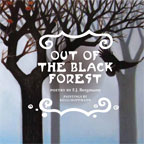
Out of the Black Forest (Centennial Press, 2012) fairy-tale poem chapbook, illustrated by Kelli Hoppmann; winner of the 2013 SFPA Elgin Chapbook Award - $5.00 color .pdf (PayPal to demiurge@fibitz.com)
“Ostensible” (Architrave Press, 2012) letterpress broadside - $3.50
“Yellow Woods” (2010) letterpress broadside - $5.00
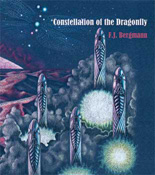
Constellation of the Dragonfly (Plan B Press, 2008) chapbook - $13.00
Aqua Regia (Parallel Press, 2007) chapbook - $10.00
Steaming A Head, 2005, chapbook of poems published in literary journals - $6.00
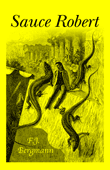
Sauce Robert (Pavement Saw Press, 2003) co-winner of chapbook contest - $6.00
Please add $1.00 postage per order.
 |
 |
 |
||||
 |
||||||
 |
|
 |
|
 |
|
 |
Anthologies
Two Countries (Red Hen Press, 2017)
Lupine Lunes (Popcorn Press, 2016)
fwa (Underland Press—Resurrection House, 2016)
My Cruel Invention (Meerkat Press, 2015)
Zen of the Dead (Popcorn Press, 2015)
On Spec 25-Year Retrospective (2014)
Cthulhu Haiku II (Popcorn Press, 2013)
On the Dark Path (Rainbow Crow Press, 2013)
Cthulhu Haiku (Popcorn Press, 2012)
Buzzkill: Apocalypse (Night Ballet Press, 2012)
Tendrils & Tentacles (Speculative Technologies, 2012)
In the Garden of the Crow (Elektrik Milk Bath Press, 2011)
The Cento: A Collection of Collage Poems (Red Hen Press, 2011)
The Hungry Dead (Popcorn Press, 2010)
2010 Nebula Awards Showcase (Roc Science Fiction, 2010)
Vampyr Verse (fiction and poetry, Popcorn Press, 2009)
Touched by Wonder (fiction, Meadowhawk Press, 2007)
DIAGRAM.2 (New Michigan Press, 2006)
180 More (Random House, 2005)
and numerous SFPA Rhysling Anthologies and Dwarf Stars anthologies
In the future, poetry had become
the arrangement of tangible objects.
Everybody had a poem, outdoors,
along an imaginary line on the lawn
in front of their house. A disparate
array of items was important, but
not mandatory. Almost invariably,
these included a very large rock.
Typically, poets would only use
material taken from nature: bird
nests, driftwood, icicles, dead snakes.
Lately there had been a faddish
tendency to add a six-pack of dwarf
marigolds. One rather self-referential
composition was nothing more than
ten metric wrenches laid end-to-end,
and an emerging surrealist had buried
a bicycle to its axles in green sand.
Its practitioners were secretly
insecure about the parameters of
their art. They sometimes met in
open parks and pastures for public
displays of new work, most of them
pulling little red wagons laden with
the lumpy tools of their trade.
The unburdened were those who
specialized in found poetry.
The most critical aspect was the
length of the line. No one knew
what the ideal dimensions ought
to be, but they all carried folding
rulers. Passers-by would often stop
to measure a poem that seemed
inadequate or excessive, and argue
at great length about whether
size mattered.
—F.J. Bergmann
First appeared in Words & Images, 2004
We left the atmosphere in a glittering swarm
of endless duplications of our shiny carapaces,
their clepsydral entrails studiously trickling,
counting down to a less unlikely tomorrow
as we fled the noisy light of our reddening sun.
A blue star in the constellation of the Dragonfly
was chosen again and again by the fanned array
of holy images, no matter how many times
magicians shuffled their whispering surfaces.
For days, everyone took turns at the telescopes
Beyond familiar stars the field worked for years,
connecting us with invisible filaments to our past.
When an unexpected demonstration of a doctrine
in the sacrament of physics turned our brothers
to a sudden flash, then cooling cinders drifting
into another universe, we became uncertain
of our destination, lost in an altered cosmology.
We entered the stacked, small cavities of oblivion
and sealed their doors against the pressure of grief.
Sleepwalking toward entropy, we float onward
in a silent void, wrapped in the blanket of time.
In the house of dreams we open the curtains
and wait for the pale light we know will come
from a strange sun rising over an alien world.
—F.J. Bergmann
Winner of the 2002 BaltiCon science-fiction poetry contest and published in Lite–Baltimore's Literary Newspaper May/June 2002